


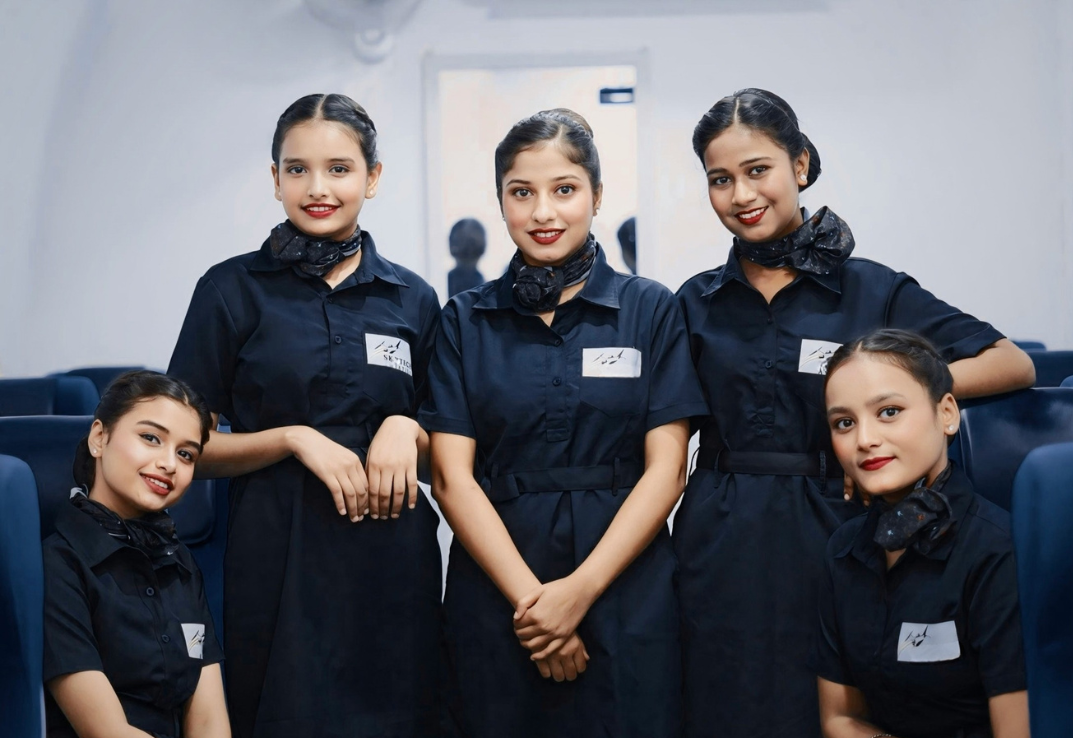
A career as a cabin crew is more than travelling the world and meeting new people. For
those who are committed to learning, building experience and developing strong
professional skills, aviation can offer a clear path for career growth.
Career Timeline:
0-2 Years: Junior Cabin Crew
Most cabin crew members begin as Junior Cabin Crew. They learn essential
responsibilities such as passenger safety, emergency procedures, customer service and
airline standards. This stage focuses on gaining confidence, experience and
professional discipline.
2-5 Years: Senior Cabin Crew
With experience, crew members may progress to Senior Cabin Crew. They take on
additional responsibilities, support junior colleagues, coordinate cabin duties and help
maintain safety and service standards.
5-8 Years: Team Leader/Purser
The next stage may be a Team Leader or Purser position, depending on the airline.
Responsibilities can include briefing the crew, coordinating cabin operations, managing
passenger concerns and communicating with the flight deck.
8-12 Years: Trainer or Instructor
Experienced cabin crew may move into training roles. As instructors, they can train new
employees in areas such as safety procedures, customer service, emergency response
and professional standards.
10+ Years: Management and Leadership
With strong experience and leadership skills, cabin crew professionals may progress
into management positions, including cabin crew management, training management or
other airline operations roles.
Career progression varies between airlines and depends on experience, performance,
qualifications and available opportunities. Nevertheless, cabin crew can develop from
entry-level professionals into experienced leaders, trainers and aviation managers.
A cabin crew career therefore offers not only the opportunity to work in a dynamic
international environment but also the potential for continuous professional growth and
long-term career development.
 English