


In aviation, safety is always the highest priority. While passengers may only see cabin crew providing hospitality and service, their most important role begins during unexpected situations. From medical emergencies to evacuations, cabin crew members are trained to respond quickly, calmly, and professionally when every second counts.
Emergency preparedness training equips future cabin crew with the knowledge, skills, and confidence needed to handle challenging situations onboard an aircraft. Through realistic training scenarios, trainees learn how to make critical decisions, communicate effectively, and ensure passenger safety during emergencies.
Emergency Evacuation Drills: Preparing for the Unexpected
One of the most essential parts of cabin crew training is emergency evacuation practice. Trainees learn how to manage passengers during situations such as aircraft fires, emergency landings, or evacuation procedures. They practice opening emergency exits, operating evacuation slides, guiding passengers, and maintaining control in high-pressure environments.
Medical Emergency Response Training
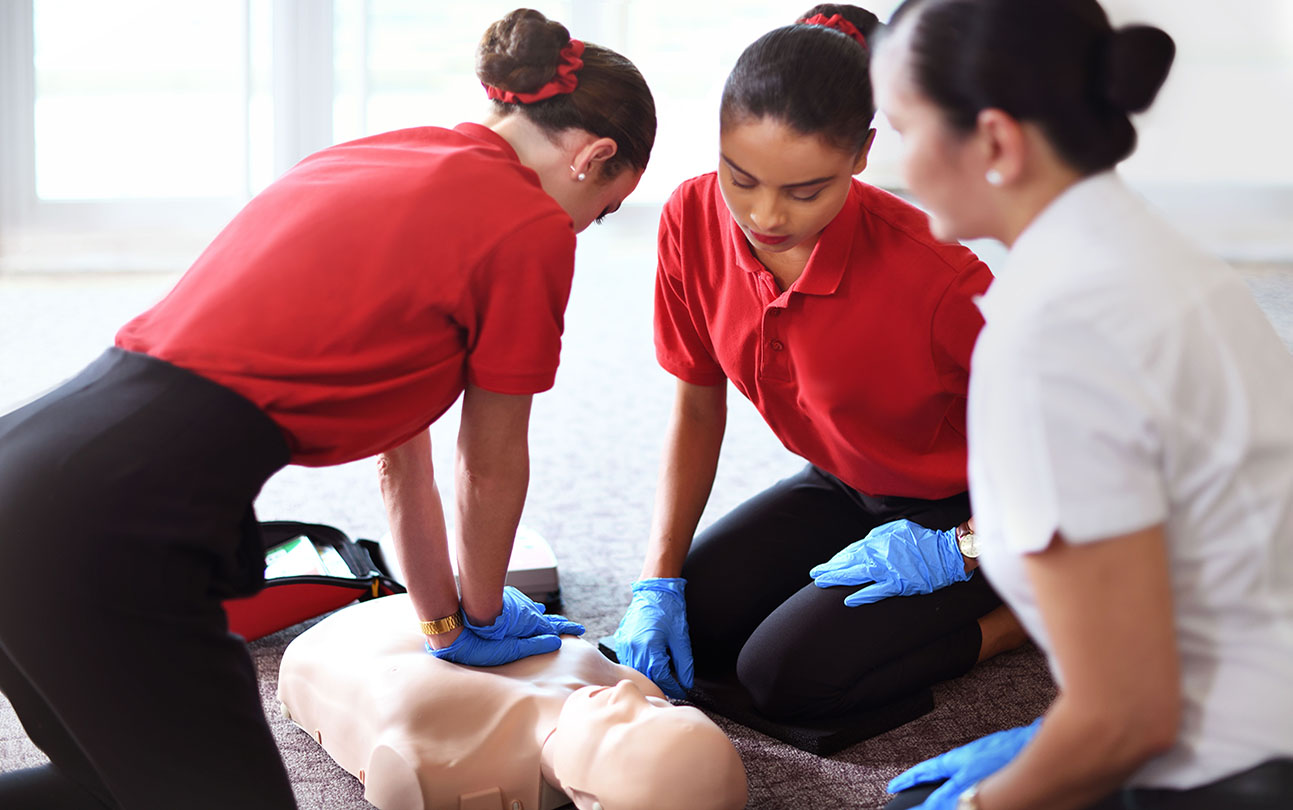
Medical situations can happen at any time during a flight. Cabin crew are trained in first aid, CPR, and the use of emergency medical equipment available onboard. Scenario-based training helps them respond to incidents such as fainting, allergic reactions, breathing difficulties, or other passenger health concerns until professional medical support is available.
Fire and Smoke Management Training
Aircraft fire emergencies require immediate action. Cabin crew trainees practice identifying sources of smoke or fire, using firefighting equipment, coordinating with the flight deck crew, and protecting passengers. These exercises build confidence and help crew members respond without panic.
Water Landing and Survival Training
For flights operating over oceans or remote areas, cabin crew undergoes survival training that includes water-landing procedures, life-raft operation, and passenger-assistance techniques. These scenarios prepare them to manage emergencies beyond the aircraft environment.
Communication and Teamwork Under Pressure
Effective teamwork is the foundation of aviation safety. Training scenarios teach cabin crew how to communicate clearly, divide responsibilities, follow standard operating procedures, and support passengers during stressful situations.
Emergency preparedness is more than a training requirement-it is a life-saving responsibility. Through continuous practice and realistic simulations, cabin crew develop the ability to protect passengers and handle emergencies with confidence, professionalism, and care.
 English